 Text: 941-666-4638
 Call: (941) 264-7770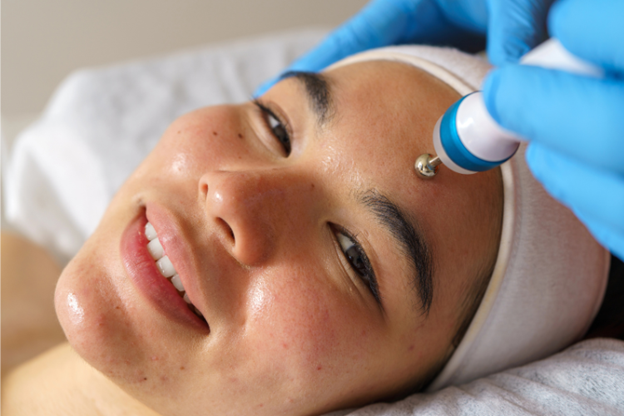
HydraFacial vs. Microneedling for Acne Scars: Which Delivers Better Results?
For millions of adults around the world, the struggle to maintain clear skin doesn’t end when acne breakouts stop. The aftermath of lingering marks, uneven patches, and textural changes offers a new, more persistent set of challenges that skincare alone simply won’t fix.
If you are researching acne scar treatment in Parrish, you have likely seen a dizzying array of options across social media, the blogosphere, and elsewhere. And among the most frequently compared procedures for diminishing acne scarring are HydraFacials and microneedling.
While both of these non-invasive treatments are considered stellar in modern medical aesthetics, they treat acne scars in fundamentally different ways. The confusion often stems from the fact that both can improve skin appearance, leading patients to wonder: Is an exfoliation-based treatment enough to tackle my scars, or do I need to go deeper?
To make the right choice, you need to know whether you need surface-level refinement or structural collagen remodeling for comprehensive acne scar removal. In this guide, we will break down the mechanisms, expectations, and ideal candidates for both, while helping you understand where they fit into a comprehensive aesthetic plan. Here’s what you need to know.
Why HydraFacial and Microneedling Are Commonly Compared
Both HydraFacials and microneedling treatments appear on the service menus of the top med spas, and both are marketed as pathways to a smoother, clearer complexion. The two help achieve goals that are highly attractive to those suffering from post-acne issues, including:
- Improved Skin Texture: Both treatments aim to refine the skin’s surface.
- Reduced Appearance of Post-Acne Marks: Both help address lingering discoloration after a breakout.
- Support for Maintenance: Both are staples in aesthetic protocols designed to keep skin healthy and congestion-free.
However, comparing them as direct competitors is misguided. Consider skin health as a renovation project. If your home has surface-level dust and grime, you need a high-powered cleaning service. If your home has structural cracks in the foundation, a cleaning service, no matter how advanced, will not fix the underlying issues.
Takeaway: HydraFacial is the high-powered cleaning service; microneedling is the structural renovation. Recognizing this distinction can help you determine which non-surgical treatments for acne scar removal will yield the results you want.
Also Read: Choosing the Right Facial Treatment for Your Skin Type (and What to Know Before You Book)
How a HydraFacial Works for Acne-Prone Skin & Texture
A HydraFacial is a medical-grade, hydradermabrasion device that uses a patented vortex-fusion system to deliver an immediate, visible improvement in skin clarity. It is not a traditional facial; it is a clinical procedure that follows a specific four-step cycle:
- Cleansing: The gentle exfoliation process removes dead skin cells and superficial debris.
- Chemical Exfoliation: A light peel (often salicylic or glycolic acid) is applied to loosen pore-clogging debris and brighten the surface.
- Extraction: The device uses suction to painlessly clear congested pores.
- Serum Infusion: High-quality serums are typically packed with antioxidants, peptides, and hyaluronic acid and are infused directly into the skin.
What HydraFacial Actually Improves
If you are asking, What treatments help with uneven skin texture? HydraFacial is a strong starting point for surface-level irregularities. This study shows how it excels at clearing clogged pores, removing dull, dead skin cells, and hydrating the stratum corneum (the outermost layer of the skin). This provides an immediate glow and a refined, smooth feel. HydraFacials are excellent for mild post-acne discoloration, such as shallow hyperpigmentation.
Limitations for True Acne Scarring
However, a HydraFacial does not target the deeper layers of the dermis, where true atrophic acne scars reside. It does not significantly stimulate collagen production, nor does it physically break up scar tissue. If your goal is the structural repair of deep indentations, HydraFacials alone will likely fall short of your expectations. It is best viewed as a maintenance treatment rather than a primary acne scar removal procedure.
How Microneedling Treats Acne Scars at the Structural Level
Microneedling, also known as Collagen Induction Therapy (CIT), operates on the principle of controlled wound healing. Using a device equipped with fine, sterile needles, a practitioner creates thousands of microscopic microchannels in the skin.
This process sounds simple, but it triggers a sophisticated biological cascade. Because these channels are technically injuries, the body immediately initiates a wound-healing response. This response requires the massive production of new collagen and elastin to patch the injury sites. As the skin repairs itself, the structural integrity of the treated area improves, which directly impacts the appearance of acne scars.
What Microneedling Improves More Effectively
This is the primary answer to the question: Does microneedling work for acne scars? Yes, particularly for atrophic scars such as rolling, boxcar, and even some ice pick scars. By breaking up the fibrous bands that tether the skin down, creating a pitted look, and forcing the skin to rebuild itself from the bottom up, microneedling addresses the source of the texture issue, not just the symptom.
When patients ask if RF microneedling can smooth acne scars, the answer is even more positive. Adding radiofrequency (RF) or PDGFs to the microneedling process introduces heat into the dermis, which further stimulates tightening and collagen remodeling. For individuals wanting the best treatment for acne scars and uneven skin texture in Parrish, PDGF+ microneedling often bridges the gap between basic microneedling and more invasive laser resurfacing.
HydraFacial vs. Microneedling: Key Differences
1. Skin Texture Improvement
- HydraFacial: Provides immediate, surface-level smoothness. It addresses the grittiness of dead skin cells and congestion.
- Microneedling: Provides gradual, structural smoothing. You will not see the final results immediately, as collagen production takes weeks to months.
2. Depth of Correction
- HydraFacial: The depth of reach is limited to the epidermis.
- Microneedling: The dermis is targeted. It fundamentally alters the architecture of the skin’s deeper layers.
3. Downtime and Recovery
- HydraFacial: Virtually zero downtime. You can return to your day immediately, making it popular for event-prep beauty.
- Microneedling: Expect 24 to 48 hours of redness, similar to a sunburn. Sensitivity is standard for a few days, and a strict post-care regimen (no sun, specific serums) is required.
4. Number of Sessions
- HydraFacial: Often performed monthly as part of an ongoing maintenance protocol.
- Microneedling: A series-based corrective treatment. Most patients require 3 to 6 sessions, spaced 4 to 6 weeks apart, to see significant structural changes.
Also Read: Combining Botox, Fillers, and Skincare: The Smart Med Spa Strategy
When HydraFacial May Be the Better Choice
HydraFacial is an exceptional clinical tool for the right candidate. It is the better choice if:
You have a mild history. Your acne scarring is minimal, or you are mostly concerned with surface dullness rather than deep pitting.
Congestion is your enemy. You struggle with frequent blackheads, oiliness, or clogged pores that keep your skin texture looking “rough.”
You need low-maintenance. You cannot accommodate the downtime of a deeper treatment, or you are seeking a refresh before a social event.
You have high skin sensitivity. Your skin reacts poorly to aggressive treatments; HydraFacial is gentle enough to provide results without causing a flare-up.
When Microneedling May Be the Better Choice
Microneedling is the clinical choice for those looking for substantive remodeling. It is the better choice if:
You have visible textural changes. You see actual indentations, dips, or pitted scars when looking in the mirror.
You are seeking long-term structural improvement. You are interested in “future-proofing” your skin by thickening the dermal layer and improving elasticity.
You can commit to a timeline. You may be wondering, How long does acne scar treatment take to show results? That question is measured in months, not days. You are ready for a series of treatments.
You aren’t responding to surface treatments. You have tried exfoliation and skincare routines, but the physical shape of your scars remains unchanged.
Can HydraFacials and Microneedling Be Combined?
In professional clinical practice, the most effective acne scar treatment in Parrish often involves strategically layering both. This approach recognizes that you cannot remodel structural scars if the skin’s surface is clogged and inflamed.
Many med spa protocols use HydraFacial as the prep step. By clearing the pores and removing surface dead skin, the skin is perfectly prepped to respond to microneedling. Furthermore, many patients choose to alternate treatments. They might start a series of microneedling to aggressively tackle the scarring, and then use HydraFacials in the off-weeks to maintain hydration and keep pores clean.
This synergy addresses both the structural concerns (via microneedling) and the surface health concerns (via HydraFacial). It creates a holistic protocol that improves skin quality and erases scars.
What Patients Often Overlook When Choosing Between Treatments
1. Acne Scars Are Not a Monolith
Which acne scar treatment improves skin texture the most? The answer is rarely a single name. If you have boxcar scars, you may need a different approach than if you have hyperpigmentation or rolling scars.
Is laser resurfacing effective for deep acne scars? Often, yes, but lasers (like CO2 or Erbium) are more aggressive than microneedling. If your scars are deep, you might need a consultation that covers the spectrum from chemical peels for acne scars and rough skin texture to fractional laser resurfacing.
2. Skin Tone and Sensitivity Matter
If you have a darker skin tone, you must be careful with laser acne scar treatment. Heat-based lasers can sometimes cause post-inflammatory hyperpigmentation (PIH) in melanated skin. Microneedling is often a safer, more predictable option for these skin types because it does not rely on thermal energy to create results.
3. Consistency is the Currency of Results
Whether you choose microneedling, chemical peels for acne scars, or lasers, consistency is king. One session of any of these will not erase years of acne damage. The results you see in before-and-after photos are almost always the result of a series of treatments, coupled with a solid home-care routine.
Also Read: 5 Signs It’s Time to Upgrade from Salon Treatments to a Medical Spa
Your Roadmap to Smoother Skin in Parrish
Your skin is resilient and capable of healing. Sometimes it just needs a little evidence-based intervention to get the process started.
The best treatment for acne scars and uneven skin texture is ultimately the one tailored to your unique skin type, scar depth, and tolerance for downtime. If your acne scars are mild and your primary concern is maintaining a clear, healthy surface, HydraFacial might be all you need. If your goal is to reclaim your skin’s smoothness by targeting the structural remnants of acne, microneedling is the superior corrective path.
Do not try to guess which treatment you need based on marketing alone. A professional assessment will look at the type of scarring, the health of your skin barrier, and your specific aesthetic goals. If you are tired of wondering which path to take, the best next step is a consultation. A personalized protocol, one that might even combine both treatments, is the most reliable way to achieve the texture and clarity you desire.
Are you ready to discover the best acne scar treatment for your skin? Schedule a consultation at Elite Medical Spa of Parrish today to get started.